Work is very important to most people: It provides financial security, structure and often also a sense of purpose. According to the 2026 Security Study conducted by the Sotomo research institute in collaboration with Zurich Switzerland, 89 percent of the Swiss workforce feel secure in their jobs. But the rise of artificial intelligence is calling this sense of security into question.
One in three people believe: Some of my professional duties can be replaced by AI
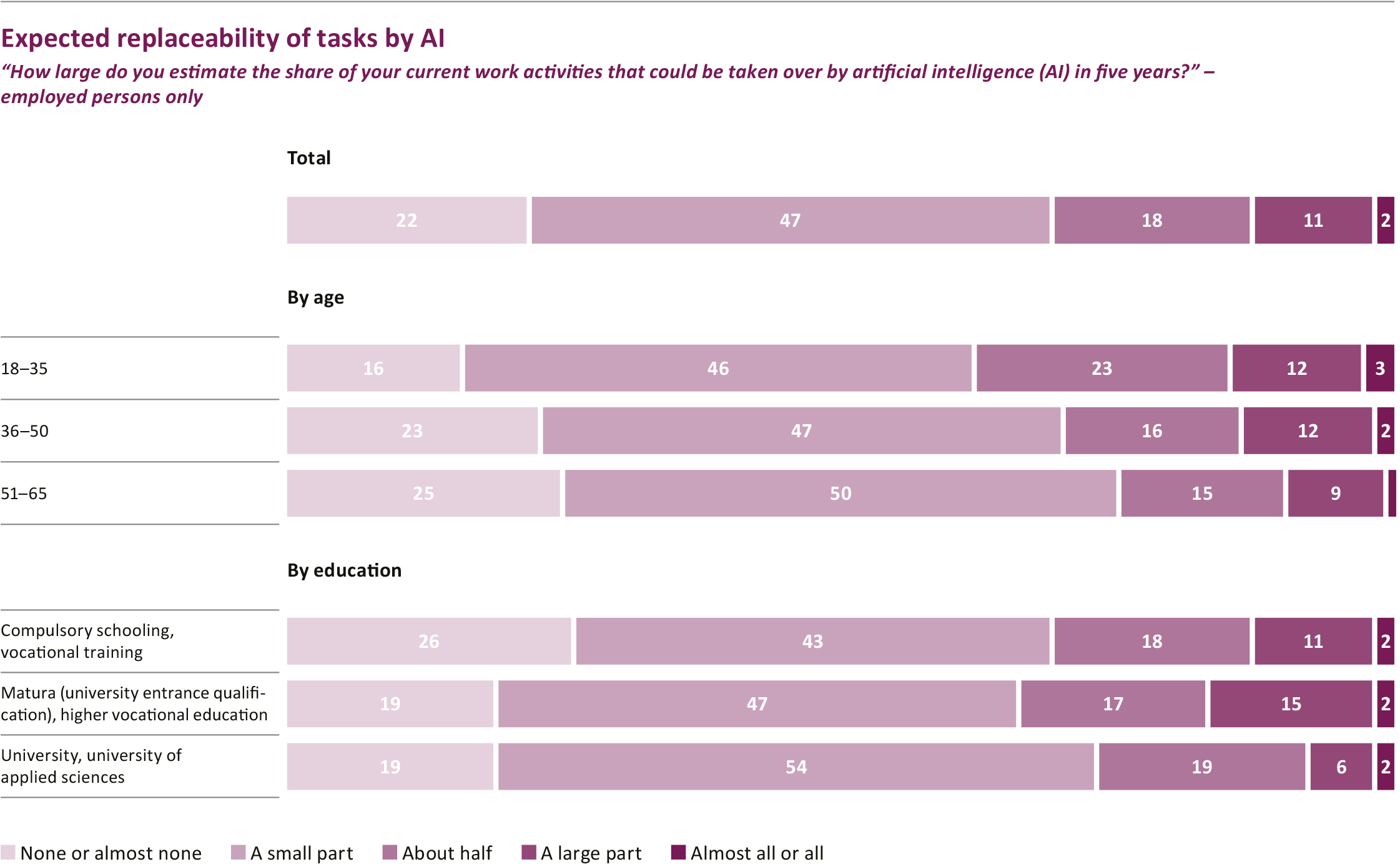
According to the Security Study, 31 percent of the workforce believe that at least half of their current work could be taken over by AI within five years. Among young people aged 18 to 35, the figure is as high as 38 percent. The authors of the study believe that, as digital natives, they have a keen sense of the potential of AI, and the study also notes that younger people often hold entry-level jobs that may be more easily replaced by AI.

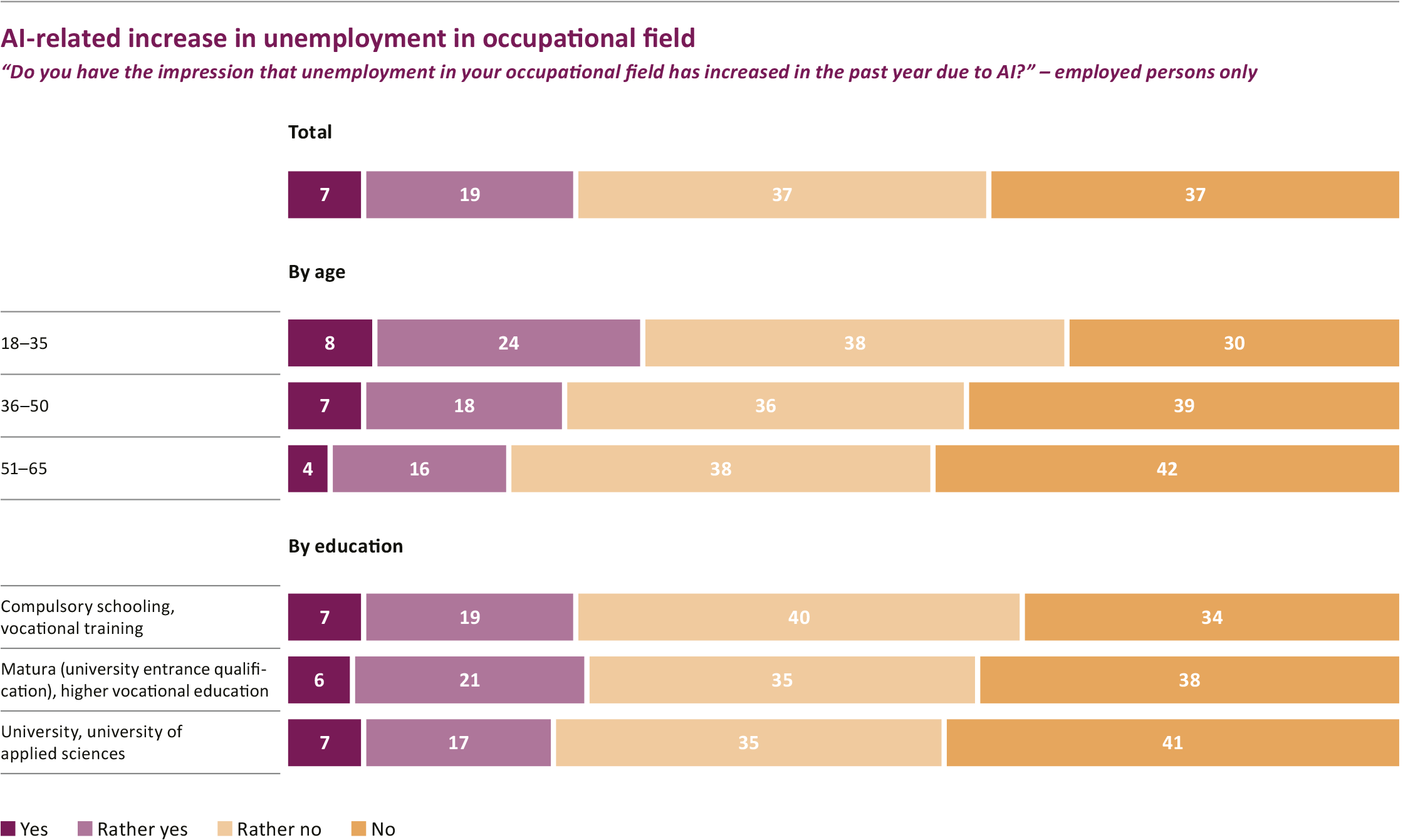
Artificial intelligence can relieve people of tedious routine tasks, but it can also lead to a reduction in the number of employees needed. Twenty-six percent of the workforce believes that AI has led to an increase in unemployment in their field over the past year, and once again it is younger people (aged 18 to 35) who are particularly aware of this: 32 percent think that AI has caused an increase in unemployment in their field.

Younger people tend to be more concerned about their jobs because of AI
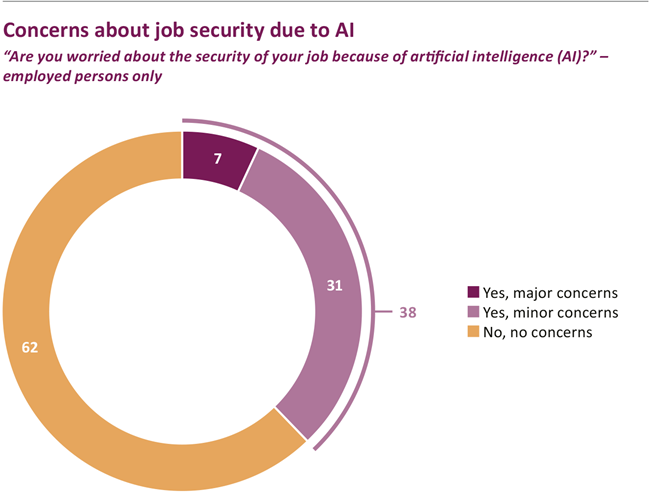
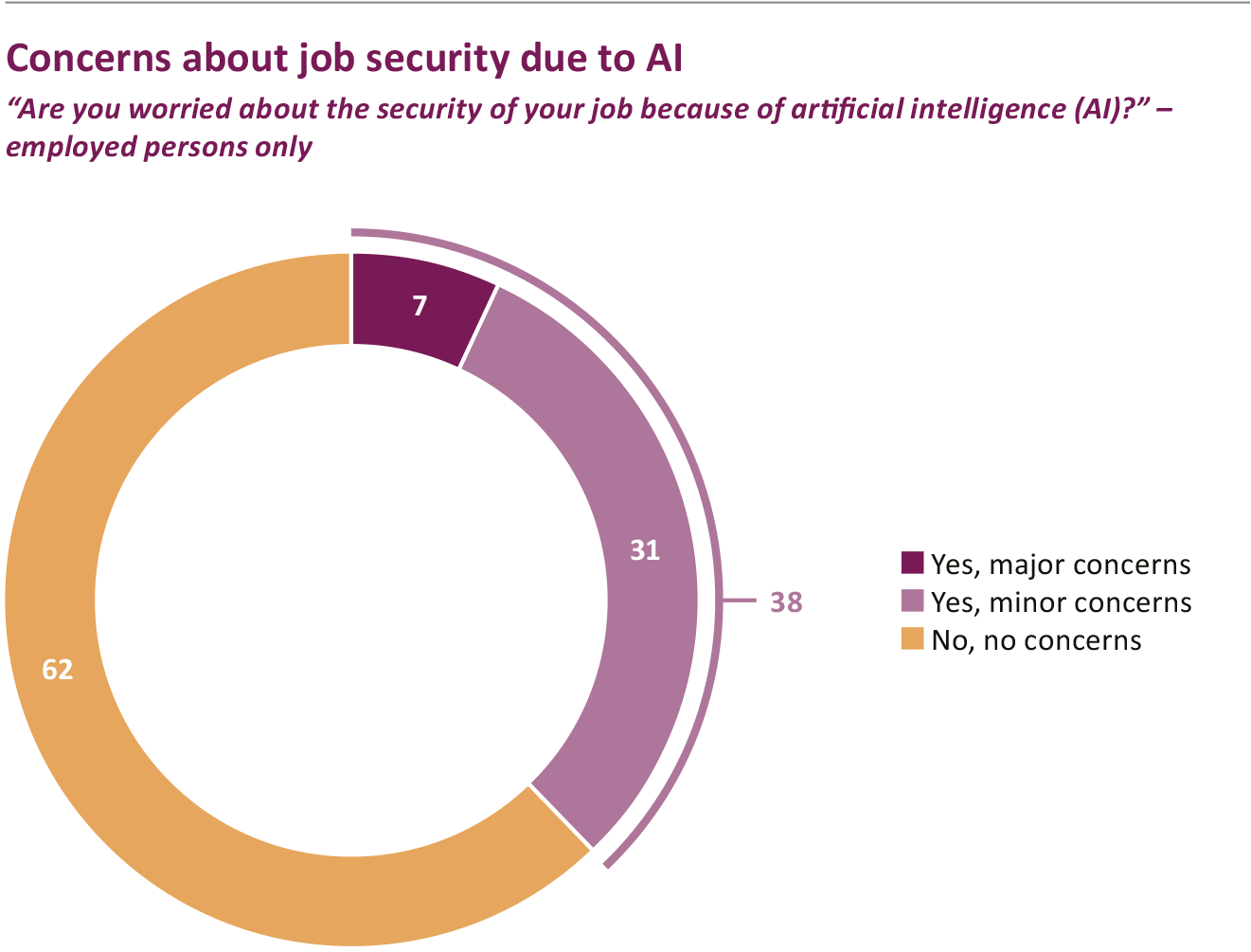
It is therefore not surprising that four in ten workers are somewhat (31%) or very (7%) concerned about the security of their jobs. People aged 18 to 35 (42%) tend to be more worried than those aged 36 to 50 (36%).
Employers: Take concerns about AI seriously and take action
These findings are highly relevant for employers, who need to take employees' concerns about AI seriously. First, these worries can negatively affect employees' well-being, cause stress and be a risk factor for mental health issues, so here it’s extremely important to create a sense of psychological security through transparency and appreciation.
Second, people’s expectations that their jobs will be replaced by AI sooner or later can undermine their performance and loyalty. Good employees in particular might be "mentally checking out" and looking for new opportunities, as is likewise indicated in the Security Study.
AI: One third of young people are considering a career change
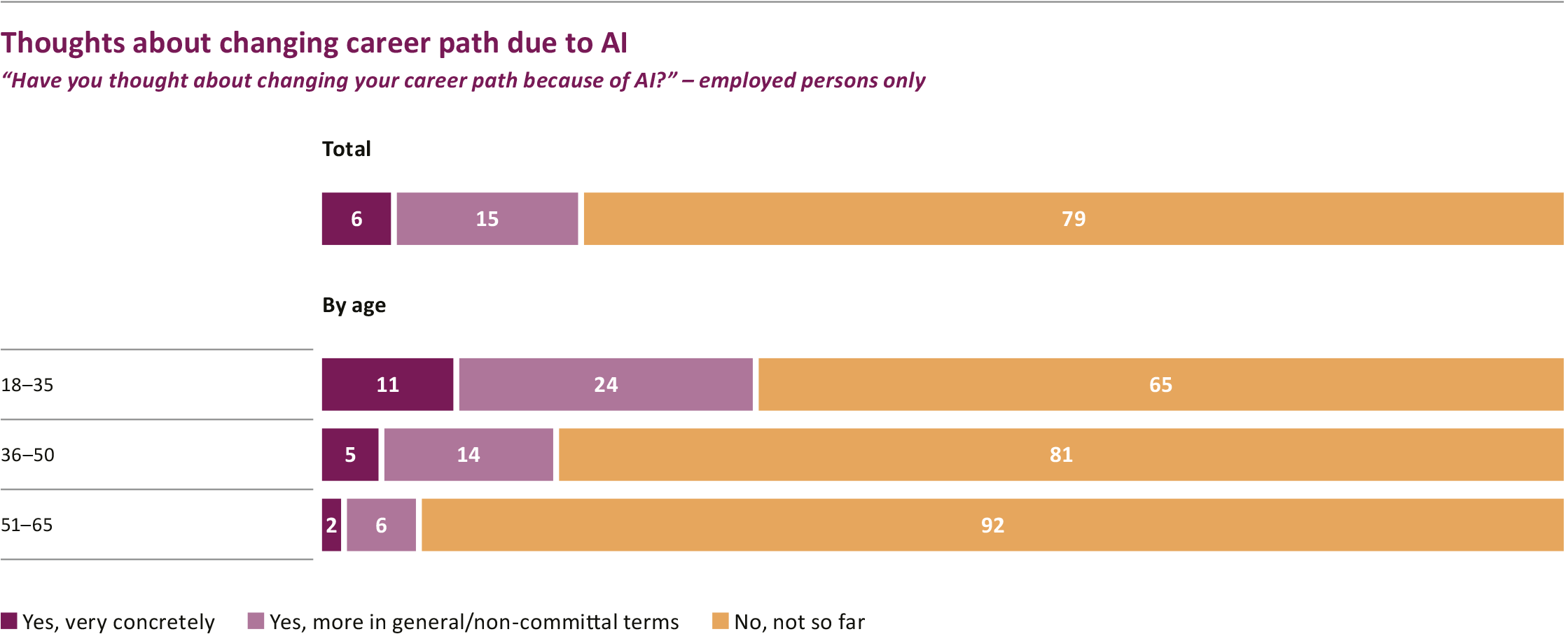
One in five working people (21%) have already considered changing careers because of AI. Among young people, that figure is as high as 35 percent, while in the over-50 age group it is just 8 percent.

Employers: Define new job profiles for the AI era
If more than a third of young people are already thinking about a career change, but among the over-50s it is fewer than one in ten, both figures provide food for thought: Young people are the future of the company; they are professionally mobile and generally have good prospects in the job market. Forward-thinking employers should make them the driving force behind their journey into the future, whereby the goal is to present them with attractive career opportunities within the company and to work with them to develop appealing "AI-ready" job profiles. In this way, a challenge can be turned into an opportunity – for both employees and the company.
Just as noteworthy as younger workers' thoughts about changing jobs is the reticence of long-serving employees: Many of them probably underestimated the disruptive potential of AI, and if they refuse to embrace the new technology they risk being left behind. At the same time, older employees – who have often been with a company for many years – possess a wealth of knowledge, and they likewise reflect the sentiments of the growing older customer segment. Here, it is important to overcome reservations, to bring older people along on the digital transformation journey, and to help them see AI as a valuable complement to their human expertise and empathy.
Taking proactive steps is also advisable from a business perspective, as the Security Study suggests that many people "cling to their jobs" out of fear of uncertainty, even if they no longer enjoy them.
Artificial intelligence is causing anxiety because it is still difficult to predict how it will affect people's job prospects.
2026 Security Study
50 percent of people have stayed in a job despite being dissatisfied
"Artificial intelligence is causing anxiety because it is still difficult to predict how it will affect the labor market and people's job prospects," according to the Security Study. In fact, half of the working population (52%) has at some point stayed in a job out of fear of financial insecurity, even though they were unhappy. About a quarter even did so for an extended period of time. This underscores the vital importance of financial security.
Concerns about living standards in old age
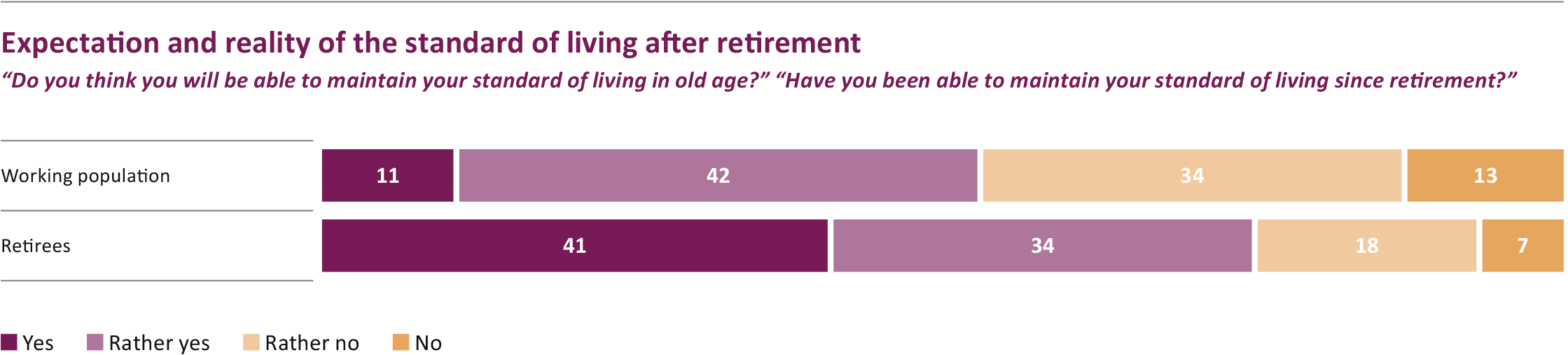
Although financial security is so important to people, only half of the working population (53%) believes they will be able to maintain their standard of living in old age. Current retirees paint a much more positive picture: Three quarters of them (75%) have been able to maintain their standard of living since retirement. Those currently in employment are therefore much more pessimistic about their financial future than retirees are about their financial present.

Sickness and accidents are feared as the greatest risk to retirement provision
More than half of the working population views sickness and accidents as a risk to their retirement provision (52%). Concerns about inflation and periods of unemployment are also widespread, with each cited as a risk by roughly one in three people. And about one fifth view a stock market crash as a major risk to their retirement provision. Retirees, meanwhile, have a different view: Most often, it was separation or divorce that affected their retirement provision (22%), followed by sickness and accidents (17%). More than a third of retirees have not experienced any significant impairment, while only 9 percent of working people expect this to be the case. "The concerns of those in employment are therefore significantly greater than the actual impairments experienced by today's retirees," comment the authors of the Security Study.
For employers: Take concerns seriously and educate people about retirement provision risks
People currently in the workforce tend to view their financial prospects in terms of retirement provision as rather bleak. They fear losing their standard of living and worry about disability and unemployment, facing yet another source of stress in an increasingly unpredictable world.
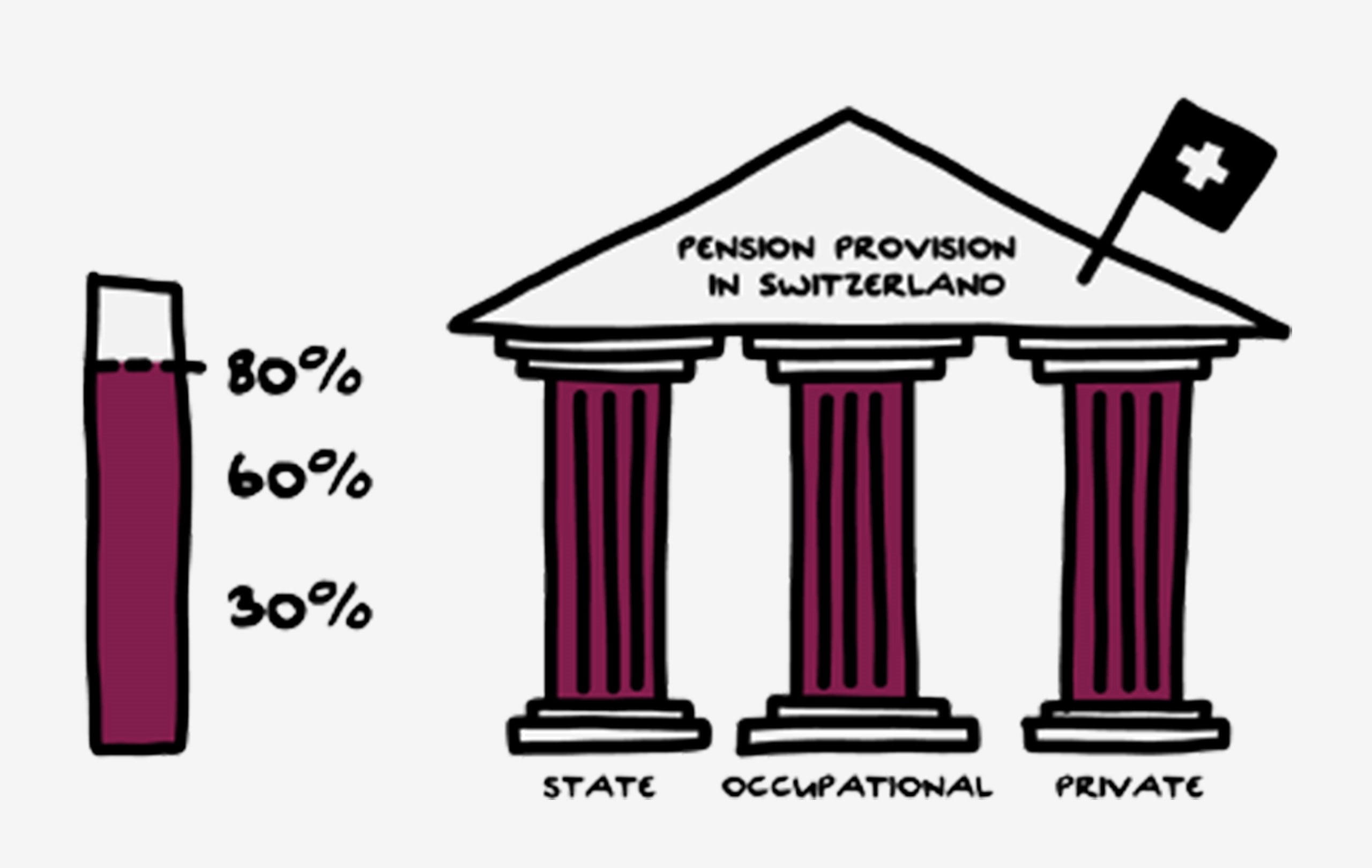
At the same time, this presents employers with a clear opportunity to better educate their employees. A valuable tool for this is a staff orientation program conducted in collaboration with the pension fund, whereby experts explain the benefits of occupational retirement provision and highlight the importance of personal retirement provision under the third pillar. This provides a sense of security and opens up options for action. Interested employees can then seek individual advice and close any potential pension gaps, for example in terms of occupational disability coverage. Together with its partner Zurich, the Vita Collective Foundation offers the "Vita Mobil" staff orientation program, which provides precisely this service.